Finance Industry Turns to Cost-Efficient AI Strategies as Expenses Soar
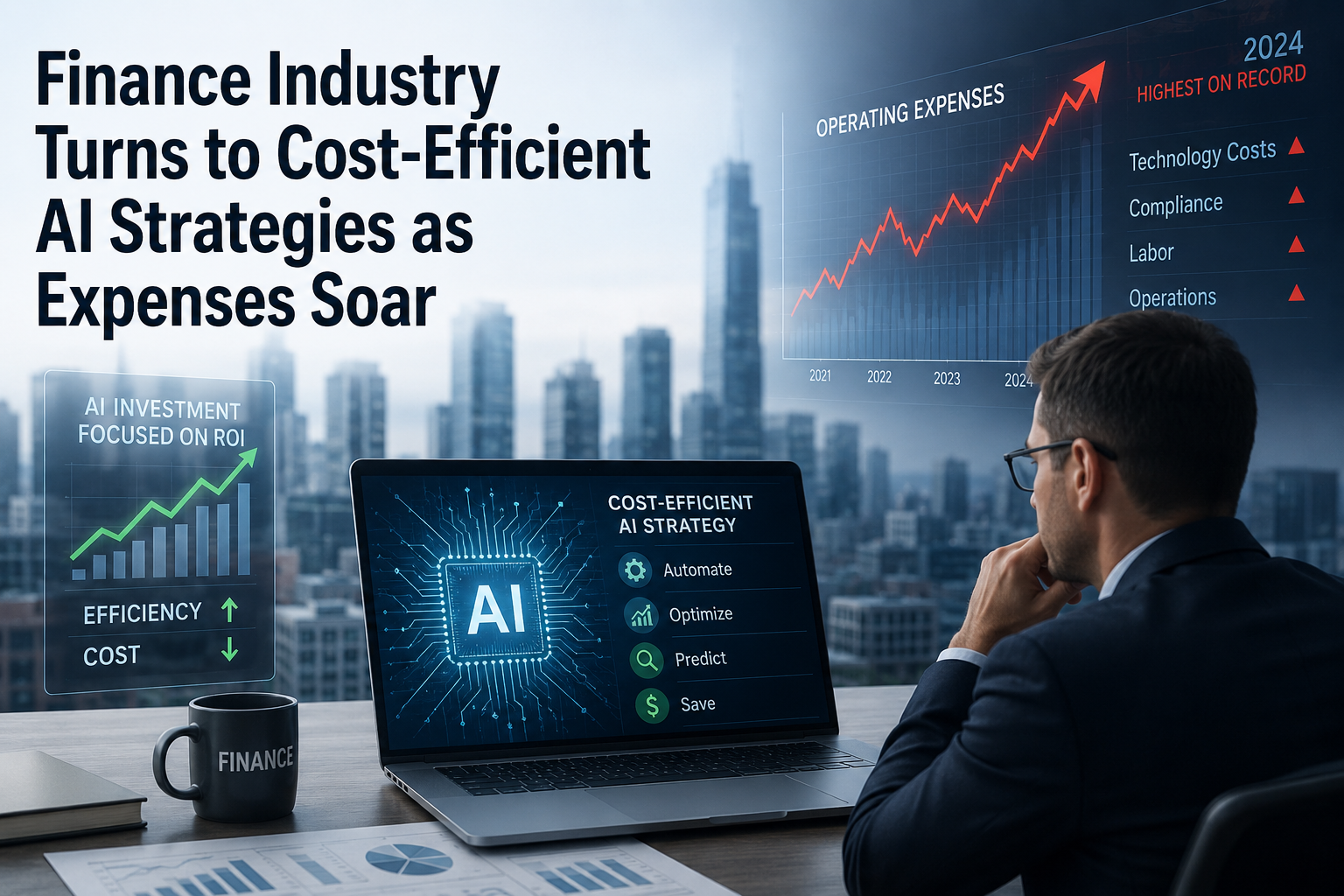
The financial sector's rapid embrace of artificial intelligence is now being tempered by a sharp focus on cost efficiency. While European banks and global institutions continue to expand AI use — from HSBC's high-profile initiatives to everyday experimentation by fund managers, traders, and analysts — the escalating price of computing power and commercial AI tools is forcing a more disciplined approach.
Practical applications abound: automating analyst report summaries into tailored rating systems, building smarter chatbots that deliver nuanced portfolio advice, and accelerating code development for quantitative teams. However, the real story is how firms are responding to ballooning costs rather than simply adopting the latest technology.
Supply bottlenecks in high-end computing have sent expenses skyrocketing. Users of Anthropic's Claude, a favorite among finance professionals, are facing repeated price increases. Even capacity-boosting moves, such as Anthropic's partnership with SpaceX, have failed to fully ease demand, pushing costs higher. What once represented tens of thousands of dollars in annual spending per firm is now on track to reach millions for larger players.
This cost pressure is prompting a strategic pivot toward greater efficiency. Many institutions are moving away from the "token-maxxing" phase — where heavy AI consumption was worn as a badge of honor — toward more measured, cost-conscious deployment. Rather than relying exclusively on expensive frontier models for every task, firms are increasingly building lighter, in-house AI systems for routine work.
"Not every task needs a frontier model," observes Christopher Tozzi, author of a history on open-source software. This realization is unlocking opportunities for cost-effective internal solutions that deliver strong results at a fraction of the price of external services.
The drive for efficiency is also raising questions about long-term dependence on a handful of US-based AI providers. Concerns over unpredictable future pricing and the risk of outsourcing core technical capabilities are accelerating efforts to retain more control in-house. This shift not only helps protect margins but also preserves valuable institutional knowledge and reduces vulnerability to vendor price hikes.
In some cases, the pressure may even encourage collaboration — something rare in the competitive finance world. Banks and asset managers could pool resources to develop shared models and spread the cost burden, particularly in Europe's crowded banking market. Such moves could finally catalyze much-needed consolidation, allowing institutions to achieve the scale required for sustainable AI investment.
Industry forecasts show technology spending still rising — nearly 8% in 2026 — but the tone has changed. Leaders are now stressing careful cost management alongside innovation. As one major bank executive noted, the priority is being "very, very thoughtful on the cost of AI."
By prioritizing cost efficiency — through selective in-house development, smarter tool usage, and potential partnerships — the finance industry is working to capture AI's productivity benefits while safeguarding profitability. This more mature, disciplined phase could prove healthier for the sector than unchecked spending, ultimately delivering stronger returns on technology investments.
